The Illinois State Library has an old Baldwin Acrosonic spinet, with spindle legs, which somebody many years ago made a clever set of dollies for. It is simple and elegant, and requires very little extra footprint. They also reconfigured a way to attach the music rack which allows for a cover to be put on with no damage.
------------------------------
Dwight D Denzer, RPT
Dwight's Piano Works
Springfield, IL
------------------------------
Original Message:
Sent: 10-08-2025 14:58
From: Steven Rosenthal
Subject: Dollies on a spinet piano (in Australia)
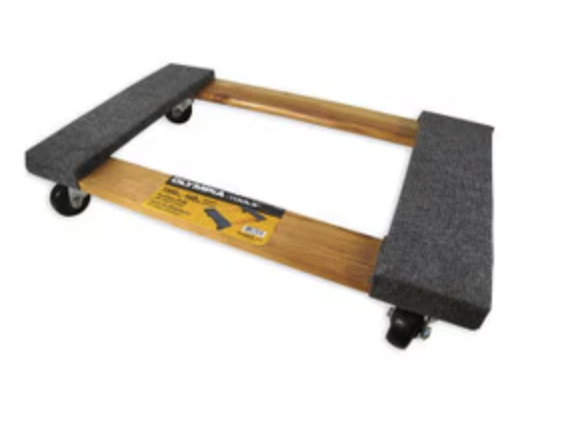
Liam, since you're only moving it occasionally from one room to the next, I would recommend that you get a furniture dolly from your local hardware store. There are inexpensive models that would make it easy for you to maneuver it through doorways etc. Just don't make the rookie mistake of catching the pedals on the dolly when you remove it. There are videos on youtube on how to move an upright piano with a furniture dolly (some are more helpful than others.). But two people can do it pretty easily.
------------------------------
Steven Rosenthal RPT
Honolulu HI
(808) 521-7129
------------------------------
Original Message:
Sent: 10-08-2025 12:13
From: Roger Gable
Subject: Dollies on a spinet piano (in Australia)
Liam,
It's unfortunate that you live halfway around the world and not in my back yard. The problem you describe is common with spinets with no toe-blocks that connect the bottom of the leg to the main body of the piano. I have installed many "toe-blocks" on spinet pianos for churches and schools rather than install a commercial dolly. Those commercial dollies are awful as they have dangerous protrusions causing tripping, plus foot and ancle injuries, not to mention the extra real estate needed around the piano for placement. I install the standard double or single rubber caster in the rear and a standard 1 ½" stemmed caster in the legs. The leg is connected to the main body via a flat steel bar connected to the bottom board. A small slit is made in the bottom sill to allow the steel bar to pass through and attach to the bottom board. This requires some cabinet and metalworking skills, but compactness and aesthetics are always appreciated.
With this configuration, the piano can be "waltzed" around the house without concern that dolly protrusions will damage furniture and foot injury. Unfortunately, I don't have a picture of such an installation. Contact me if you seek detailed information.
roger@gablepiano.com
------------------------------
Roger Gable RPT
Gable Piano
Everett WA
(425) 252-5000